


Recently, I have been playing a lot of space based videogames and I thought what better way to find out about a mission to space that changed the world. I always wanted to be an astronaut when I was really little; mostly because of the movie Rocketman, in which a normal guy who’s always been obsessed with space, gets to go to Mars and causes mayhem and havoc on his journey. Then when I grew up (and still today), I idolized Commander Jane Shepard, the videogame protagonist who saves the universe 3x’s over and gets to meet cool aliens along the way. Recently I went to Florida for the first time, and I was lucky enough to go to the Kennedy Space Centre; Damn, that place was magical! So, today I’m paying tribute to all the real heroes that tried to get to space in 1983, but sadly never made it. Today, we’re going to be learning about the Challenger.
“Flight controllers here are looking very carefully at the situation. Obviously a major malfunction,”
CNN News Anchor
In April 1983, the Challenger managed to get to space! Construction for STA-099 (the original name) began at Rockwell International in November 1975 and was originally going to be a test vehicle; as computer models at the time couldn’t handle the stress on the shuttle during its flight. After the shuttles construction, it went through 11 months of vibration testing (this is a test that mimics the conditions that the shuttle may be put through, and it just generally makes sure the STA-099 would be prepared for the journey to space) NASA being NASA put it through a special space test basically [if you’re like me and get confused with everything].
When vibration testing had finished, NASA had decided to convert it into a real shuttle; to do this, the wings were strengthened and a real crew cabin was installed rather that the simulated one. Heads-up displays were also completed, which was for the astronauts working inside. After this was constructed, work was finally completed for the Challenger on 23rd of October 1981.
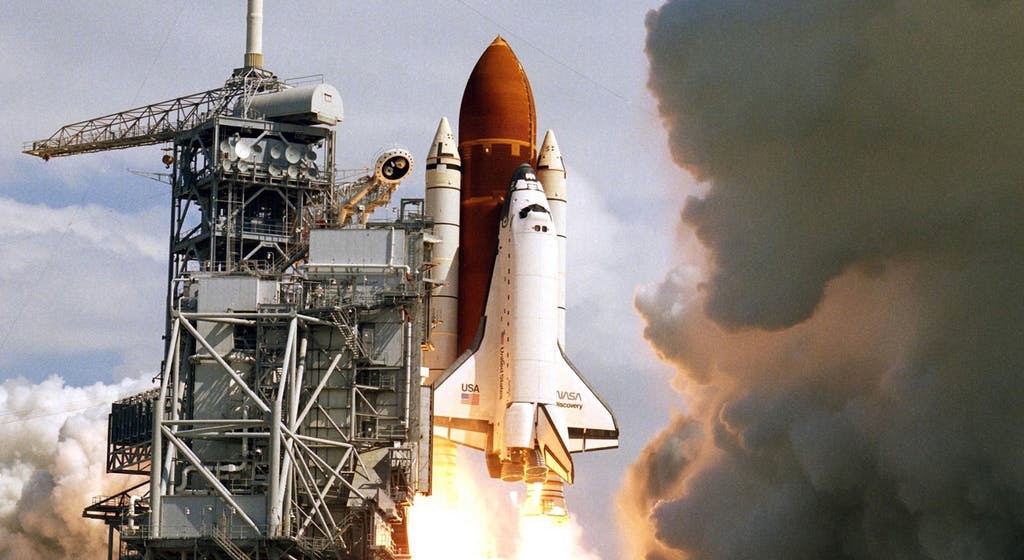
After 5 years of successful missions, the Challenger was about to embark on what would be it’s last. What was the shuttle going into space for in the first place? I hear you cry! Well, the mission was to launch the second TDRS-B, or Tracking and Data Relay Satellite; but aswell as that, the Challenger was carrying the Spartan Halley spacecraft, which was a small satellite that the crew were going to release, so that NASA could watch Halley’s Comet on its closest approach to the sun.
The morning of the Challengers flight had been a touch-and-go situation; the temperature had dipped below freezing. This led some of the shuttle engineers to worry about whether the solid metal O-rings on the rocket boosters would hold in such cold temperatures. Even with the scientists’ worries, she launched at 11:38am with Commander Francis ‘Dick’ Scobee, Micheal Smith (pilot), Judy Resnik, Ronald McNair, Ellison Onizuka (all mission specialists), Gregory Jarvis (Payload Specialist) and Christa McAuliffe.
At 46,000ft, only 73 seconds into launch, the Challenger’s journey into space had gone sideways. Now, even though it looks as though the Challenger exploded, technically it didn’t. When investigated further NASA figured out that it was actually one of the solid seals that the scientists were worried about earlier that morning, that had the issue. The right solid-fuel rocket booster had weakened in the cold temperatures. During lift-off hot gas started leaking out of the crack in the fuel tank; this caused the fuel tank to collapse and tear itself apart, and due to the oxygen and hydrogen merging it created a fireball, which brought the shuttle down.
As much as we’d like to think that the crew’s deaths were painless and instantaneous, they actually weren’t. It took about 2 minutes 45 for them to die. The Challenger stayed intact and continued to climb after the initial blow-out until a NASA range safety officer destroyed both solid-rocket boosters by remote control. Without the fuel tank and boosters though, the shuttle was ripped apart. At 65,000ft it came down into the Atlantic. The crew would have most likely lost consciousness, due to the loss of oxygen and cabin pressure.
[Physics and mechanics have never been something I’m very good at so in a step-by-step run through of the disaster if my previous explanation wasn’t very good]
- The Solid rocket boosters ignite
- O-rings on the right booster have been hardened because of the cold weather the night before and can’t keep the lower most field joint sealed
- Then the hot gases escape
- Then the aluminium slag from the rocket fuel builds up and blocks the hole
- The shuttle starts shaking
- Aluminium slag is dislodged because of the violent shaking of the shuttle and the flames begin coming through the gap
- The fire is beginning to target the tank
- Liquid hydrogen spills out
- Attachment between booster and tank breaks free
- Bottom section of the tank gives way
- The makes the hydrogen compartment mix into the oxygen filled container just as the nose of booster crashes into the external tank
- Then that’s when the ‘explosion’ occurred.
After the incident, NASA declared that the “shuttle is not safe to fly at such cold temperatures.” Which seems like one of the most ridiculously obvious and pointless conclusions I have ever read.
One of the reasons why the Challenger disaster was such a big deal was (not only because it was the first ‘proper’ space disaster) but because it also involved a teacher named Christa McAuliffe. She was signed onto the Challenger crew after a nationwide project called the Teacher in Space Project hand-picked her. Christa was chosen from 10 other possible candidates to go to space. Christa seemed like one of the best teachers around, and she was even going to teach from space when she got there! Media coverage was pretty extreme because of Christa, which meant more people than usual saw the disaster unfold.
The crew could have never escaped. NASA shuttles didn’t and still don’t have an emergency escape system; 17 years later, there was another shuttle disaster, Columbia, the crew once again were KIA and NASA looked into putting in emergency escapes, but they were unable to do so.
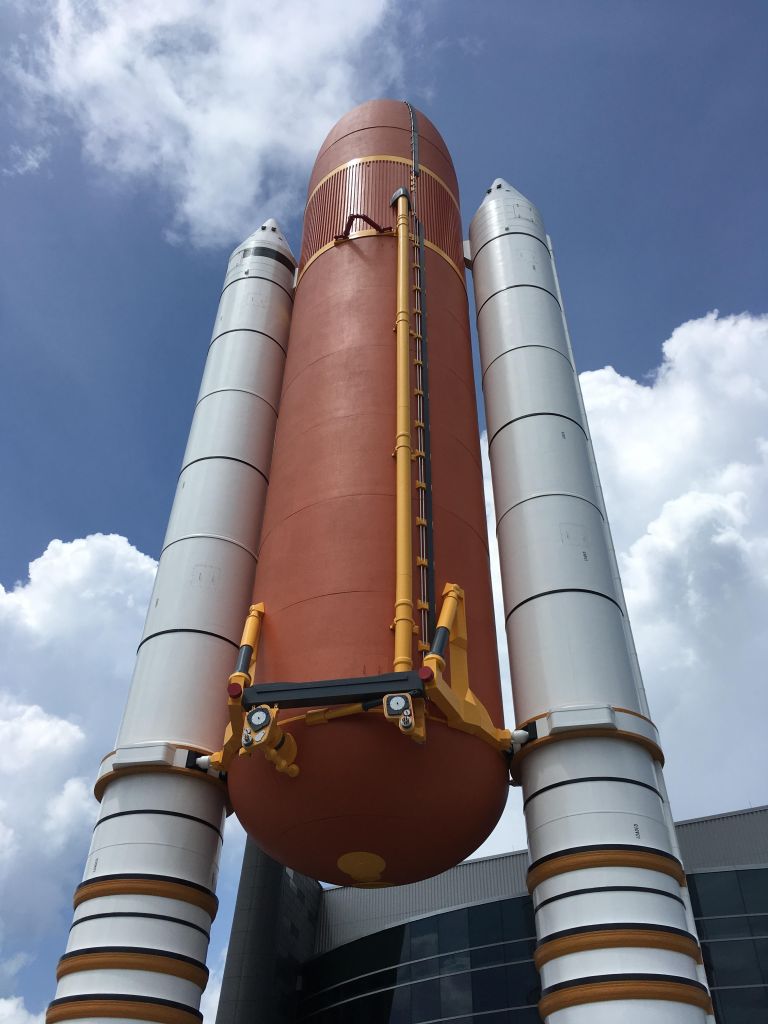
The Challenger had many successful missions however, one of which was the first spacewalk of a shuttle programme, carried out by Story Musgrave and Donald Peterson; after this, the first American female astronaut, Sally Ride went up to space in June 1983 in the Challenger, and also the first black astronaut, Guion Stewart Bluford Jr, went to space with the Challenger! In 1984, Sally Ride went back up to Space with Kathryn Sullivan together and the first Canadian, Marc Garneau went up with them.
In April 1984 the Challenger carried the astronaut George Nelson, who carried out the first astronaut repair of a satellite. Challenger was also the first shuttle to launch at night, and was the first operational spacelab flight!
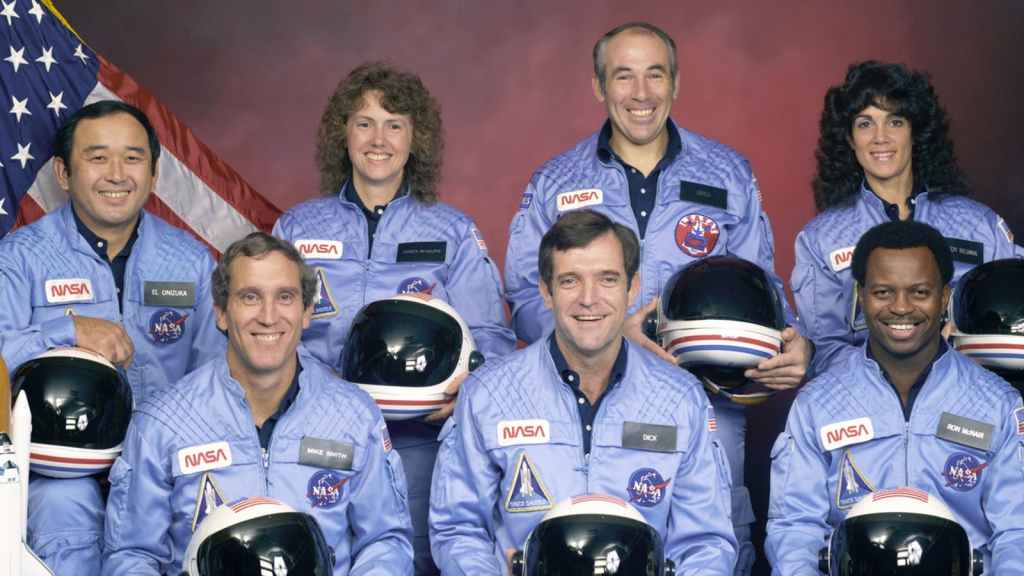
The Challenger was the first space disaster we had seen unfold live in-front of our eyes and NASA remembers the brave crew in a memorial “Forever Remembered” at the Kennedy Space Centre, where they have some remains of the shuttle. The flight, although a disaster, allowed the teams to work at making the space shuttles safer and better. Space flight was halted for 3 years after the disaster. It paved the way for the trials and issues we would face in spaceflight.
An amazing crew and an amazing teacher were lost that day.
 Return Of The Famous Dead